This is default featured slide 1 title

Go to Blogger edit html and find these sentences.Now replace these sentences with your own descriptions.

This is default featured slide 2 title

Go to Blogger edit html and find these sentences.Now replace these sentences with your own descriptions.

This is default featured slide 3 title

Go to Blogger edit html and find these sentences.Now replace these sentences with your own descriptions.

This is default featured slide 4 title

Go to Blogger edit html and find these sentences.Now replace these sentences with your own descriptions.

This is default featured slide 5 title

Go to Blogger edit html and find these sentences.Now replace these sentences with your own descriptions.

Showing posts with label CNN health. Show all posts

Tuesday, October 15, 2013

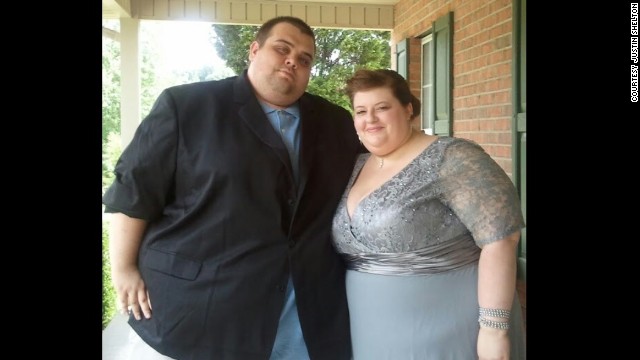
Medical emergency motivates couple to lose 538 pounds
Medical emergency motivates couple to lose 538 pounds


At work one day, IT consultant Justin Shelton suddenly began to feel ill. A few hours later, he was in the emergency room, and doctors told him he might have a kidney infection.
They just needed to run a scan to confirm the diagnosis.
The next words were a cold reality check: The imaging machine could not support his weight.
"They told me, 'We think you have a kidney infection, but we can't confirm for sure, so we're just going to treat it aggressively and hope that's what it is,' " Shelton said.
He was 25 years old and weighed 592 pounds.
Two years earlier, Justin's wife, Lauren Shelton, had had her own medical scare; her gallbladder had to be removed because of weight-related complications. At her heaviest, Lauren weighed 341 pounds.
Their size made everyday tasks difficult, too. Years ago, Lauren was on a plane, and the seat belt wouldn't buckle. She was mortified and tried to hide from the flight attendants that she didn't fit into the seat.
Both Lauren and Justin had been asked not to get on rides at a theme park because of their size.
But Justin's trip to the emergency room was the final straw. The Jefferson City, Tennessee, couple realized something needed to change.
Luckily for Justin, doctors were right and able to treat his kidney infection without the scan. "It made me think, 'What if it was something else? What if it was more serious? What would I have done then?' " Justin said.
So in February 2012, the couple began a 19-month journey to take control of their health.
Early struggles
"I was always bigger than the other kids, but the pounds really started packing on during high school and continued to do so over the next several years," Lauren wrote on her blog, OvercomingO.com.
For Justin, it was a knee injury at age 13 that kept him from playing sports. The exercise went away, bad eating habits continued, and his weight got out of control.
The Sheltons met online seven years ago, and their relationship revolved around their eating habits. They would go out to eat and indulge in one unhealthy meal after another.
They knew that in order to get healthy, they needed someone to steer them in the right direction. So they sought help from a weight-loss management program at a local medical school.
A physician's assistant gave them guidelines on what they should and should not be eating, and on the amount of exercise they needed.
Justin and Lauren started their new exercise routine by doing simple activities such as walking around the park and swimming. In late 2012, they joined a gym.
"We go to the gym five to six days a week and take one day off and try to do something fun and active like hiking or swimming," Lauren said.
The couple also started using a smartphone app to track the calories they consumed. In the beginning, they ate at restaurants only on special occasions and prepared all meals at home.
Lauren found recipes for healthier versions of the foods they loved. Their diet primarily consists of lean meats with lots of fruits and vegetables. Even today, everything they eat goes into a food journal.
The weight came off quickly at the beginning. Justin lost 25 pounds and Lauren lost 30 pounds during the first month alone. They tried to keep the weight loss steady after that, knowing they couldn't expect to see such a big number month after month without being disappointed.
Weekly weigh-ins helped them track their progress.
"We have graphs that show our weight loss through an app. It helps us stay motivated and get through the hard weeks," Justin said.
In just 19 months, Justin dropped 362 pounds and Lauren lost 176, for a total of 538 pounds.
'Nobody is perfect'
As they begin to move into the maintenance phase of their diet, the couple has allowed themselves to indulge once in a while. They now have what they call their Special Sunday Meal, where they will cook something they don't typically have during the week.
"This Sunday, we may have grilled turkey burgers on a whole-wheat bun with some oven-baked potatoes," Lauren said. "Typically, we do not have starches very often and do not keep breads in the house."
They still give in to cravings from time to time. Lauren says she has a sweet tooth, but she controls cravings by distracting herself with activities such as walks or naps.
What keeps her on track is understanding that "No matter how many times you slipped or messed up, you just have to start over, and eventually you'll get there," she said. "You have to stay positive and remind yourself that you're human and nobody is perfect."
Even though they've managed to lose a substantial amount of weight -- Lauren went from a size 32 dress to a size 12, and Justin went from size 58 pants to a size 36 -- the couple struggles with the psychological side effects of such a massive physical change.
Self-image has been an obstacle for both Lauren and Justin. They admit to having moments when they still see themselves as the obese people they used to be.
"I don't see myself as quite as small as what the pictures show or people tell us we look like," Lauren said.
Through both the struggles and triumphs they have found support in each other. They say that doing this as a team has brought them closer together, and they feel like they are almost newlyweds again.
Recently, Lauren and Justin traveled on a plane and were thrilled to find they could not only buckle their seat belts but needed to tighten them. They also returned to the theme park and rode the rides with no problems at all.
"It was kind of triumphant," Justin said. "We are a lot more adventurous and outgoing. Our outlook has changed almost completely."


Monday, October 14, 2013

Teen makes dramatic recovery after smoking synthetic marijuana

Teen makes dramatic recovery after smoking synthetic marijuana


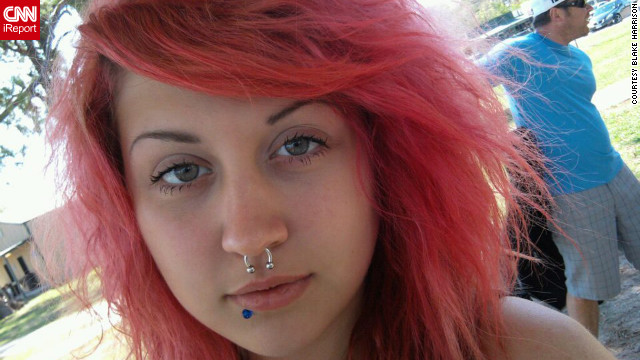
(CNN) -- Nine months after synthetic marijuana destroyed a large portion of her brain, Emily Bauer did something her parents feared they'd never see: She went back to high school.
Excited, nervous and terrified, the sophomore rolled through the hallways of Cy-Fair High School in Cypress, Texas, last week. Despite the familiar surroundings, Emily is living in a new world.
She can't read or write. She is relearning basic addition and subtraction. A rotating cast of aides help Emily get through her school day. They wheel her from class to class, assist her in the restroom, help her eat, read class material to her and take notes for her, as she is partially blind. She attends school for half the day and goes to therapy in the afternoon.
And the 17-year-old has a message for anyone who wants to try fake weed.
"The high is great, but in the long run, it isn't good," she said, describing her experience smoking synthetic weed. "It's no fun to be stuck in a wheelchair, to have to go to therapy or (possibly) die."
But she prefers to focus on the stuff she can do, like getting a perfect score on her first world history quiz. For the fiery-haired student, simply being back at school is epic.
Less than a year ago, in December 2012, Emily was on life support after several strokes left her paralyzed, blind and largely unaware of her surroundings. Her family has no doubt the drug that landed her in the hospital was synthetic marijuana. Her parents first believed she had only tried it a couple times. But they recently learned the extent of her use -- Emily told them she smoked it daily for the two weeks before she went to the hospital.
Best known by the street names "Spice" or "K2," fake weed is an herbal mixture sprayed with chemicals intended to create a high similar to smoking marijuana, according to the National Institute on Drug Abuse. Advertised as a "legal" alternative to weed, it's often sold as incense or potpourri and in most states, it's anything but legal.
Emily's stepfather, Tommy Bryant, told CNN last year that doctors diagnosed his daughter with vasculitis, which is an inflammation of the blood vessels. The vessels going into Emily's brain were constricting, limiting blood and oxygen flow.
Emily is far from alone in her scary experience. Last week, three people in Colorado may have died after smoking the drug, according to state health officials. The Colorado Department of Public Health launched an investigation after 75 people were hospitalized in late August after using the substance.
CNN first wrote about Emily in February, after learning about her story through iReport. A lot of people were quick to say then that marijuana should be legalized so drugs like these aren't on the market. Others pointed out after the Colorado news that marijuana is legal in that state. Emily's stepfather, who has been in her life since she was born, is not interested in the debate.
"My focus is trying to get rid of this one bad product and not trying to substitute with anything else," said Bryant.
Bryant and his family started an organization called Synthetic Awareness For Emily to educate families, as well as teachers and doctors, about the dangers and warning signs of synthetic marijuana use. He said his goal isn't to scare students -- he just wants them to be aware that this stuff is out there.
"I'm trying to get the kids to realize that one bad decision could lead to a lifetime of pain," Bryant said. "Not just for them, but for their loved ones."
It's been a slow recovery. After months in the hospital, Emily's family had to operate a lift in their home to move Emily from the bed or from the chair. Now Emily can stand up and shift herself, so it's easier for her parents to transfer her on their own, her mother Tonya Bauer said.
She can't walk, but she's been taking physical steps at therapy sessions. Special equipment supports her body so she can focus on moving her feet.
Emily has difficulty lifting the front of her foot, also known as "foot drop." Her feet point straight down when she stands up, which puts her knees and hips out of alignment. The family has opted for a tendon-lengthening surgery in the near future. Her mother hopes the surgery will mean Emily will be able to walk again one day.
As Emily recovers, she and her family try to find joy in doing small things. They go out to movies and ice cream here and there, and they even took Emily to a Drake concert a few weeks ago.
Seeing Emily sing along and be a teenager again, along with watching the handicap bus whisk her off to school last week, are signs that Emily is feeling more like herself, said her parents. And here's more evidence: During her telephone interview with CNN, she sounded just like a typical 17-year-old girl.
"Our goal is to get Emily independent again so she can live on her own one day," said her mother. "Having her go back to school has really made us see that this is possible."

Sunday, October 13, 2013

15 best superfoods for fall

15 best superfoods for fall

Apples: Sweet or tart, apples are satisfying eaten raw or baked into a delicious dish. Just be sure to eat the skin -- it contains hearty-healthy flavonoids.

Health benefits include
• Full of antioxidants
• 4 grams of dietary fiber per serving

Brussels sprouts: Made the correct way, these veggies taste divine. They have a mild, somewhat bitter taste, so combine them with tangy or savory sauces, like balsamic vinegar.

Health benefits include
• 1/2 cup contains more than your DRI of vitamin K
• Very good source of folate
• Good source of iron 

Parsnips: Though these veggies may resemble carrots, they have a lighter color and sweeter, almost nutty flavor. Use them to flavor rice and potatoes or puree them into soups and sauces.

Health benefits include:
• Rich in potassium
• Good source of fiber

Pears: The sweet and juicy taste makes this fruit a crowd-pleaser. Cooking can really bring out their fabulous flavor, so try them baked or poached.

Health benefits include:
• Good source of vitamin C and copper
• 4 grams of fiber per serving 

Turnips: Tender and mild, these root vegetables are a great alternative to radishes and cabbage. To flavor these veggies, use fennel, bread crumbs, or even brown sugar. Turnip leaves, which taste like mustard leaves, are easy to cook and dense in nutrients.

Health benefits include:
• The roots are a good source of vitamin C
• Turnip leaves are an excellent source of vitamins A, K, and folate

Cauliflower: The sweet, slightly nutty flavor of cauliflower is perfect for winter side dishes. It's wonderful steamed, but it can also be blended to create a mashed potato-like texture or pureed into soup.

Health benefits include:
• Compounds that may help to prevent cancer
• Phytonutrients may lower cholesterol
• Excellent source of vitamin C 

Squash: Unlike summer squash, winter squash has a fine texture and a slightly sweet flavor. Because of its thick skin, it can be stored for months. It tastes best with other fall flavorings, like cinnamon and ginger.

Health benefits include:
• Contains omega-3 fatty acids
• Excellent source of vitamin A

Pumpkin: A type of winter squash, pumpkin can be used for much more than jack-o'-lanterns. Its sweet taste and moist texture make it ideal for pies, cakes, and even pudding!

Health benefits include:
• Rich in potassium
• More than 20% of your DRI of fiber
• Good source of B vitamins

Sweet potatoes: These veggies are for much more than Thanksgiving casseroles. More nutritionally dense than their white-potato counterparts, try roasting them—they'll taste delicious, and you may maintain more vitamins than boiling.

Health benefits include:
• Excellent source of vitamin A
• Good source of iron
• Anti-inflammatory benefits 

Rutabaga: A cross between a turnip and a cabbage, rutabagas are a popular Swedish dish. To utilize their earthy flavor, add them to casseroles, puree them with turnips and carrots to make a sweet soup, or roast them with ginger, honey, or lemon.

Pomegranates: This slightly sour fruit has gotten a lot of press as an antioxidant powerhouse. The juice provides a tangy base for marinades, and the seeds can be tossed into salads to amp up the flavor.

Health benefits include:
• A UCLA study showed pomegranate juice has higher antioxidant levels than red wine
• Good source of vitamin C and folate 

Dates: This Middle Eastern favorite is a sweet fruit that is perfect braised in stews, chopped up in desserts, or stuffed with cream cheese or almonds.

Health benefits include:
• Low in fat
• Good source of fiber
• Good source of potassium

Kiwi: Use this sweet fruit to add a tropical flavor to your recipes. It's great mixed with strawberries, cantaloupe, or oranges and can be combined with pineapple to make a tangy chutney.

Health benefits include: • More vitamin C than an orange • Good source of potassium and copper 

Grapefruit: The signature tartness of grapefruit provides a contrast to other citrus fruit. Add it to mixed greens, combine it with avocado and shrimp, or enjoy a fresh glass of its antioxidant-rich juice.

Health benefits include: • More than 75% of your daily recommended intake (DRI) of vitamin C • Good source of lycopene • Contains pectin, which has been shown to lower cholesterol

Tangerines: The small and sweet citrus fruits are positively refreshing for fall recipes. Our favorite flavor combos include almonds, dates, and honey. Juice them with oil, vinegar, and ginger for a to-die-for dressing.

Health benefits include:
• Good source of vitamin C
• Good source of beta-carotene 

Saturday, October 12, 2013

Government shutdown forces clinical trial patients to wait

Government shutdown forces clinical trial patients to wait


(CNN) -- Michelle Langbehn, 30, has endured nine months of chemotherapy, two cycles of radiation, a spinal fusion and several tumor removal surgeries. But the cancer that's attacking her body continues to spread, and her future treatment options are limited.
There was hope for the Auburn, California, mom -- a clinical trial that's testing a new drug called Cabozantinib that's been approved to fight other cancers. Researchers at the National Institutes of Health had gathered Langbehn's medical records; they were set to evaluate her status on Monday to make an official enrollment decision, she says.
Then the government shut down.
Every week, hundreds of patients like Langbehn are admitted to new clinical trials at the National Institutes of Health. But as of Tuesday, these patients are being put on hold until the government resumes operation.
"Due to the lapse in government funding ... transactions submitted via the web site may not be processed, and the agency may not be able to respond to inquiries until appropriations are enacted," a message on the top of the NIH website states.
Every week, about 200 new patients come to the NIH Clinical Center in Bethesda, Maryland. Patients are now being told they will have to wait until the government starts up again to begin their trials, according to NIH spokesman John Burklow.
"In fact, six new studies would have started this week that we are deferring," Burklow said.
Approximately 30 of the 200 new patients are children, he said, and about 10 of those children are cancer patients.
"I am furious," Langbehn said. "They are denying or delaying potentially life-saving treatments to Americans in need of a miracle. I speak for everyone battling cancer when I saw we don't have time to wait."
Langbehn's oncologist gave her two years to live. That was last July. "I do not plan on letting this take me away from my family," she says.
Burklow did note that participants who are already in studies are still being treated and will continue with their trials. Burklow also said patients in desperate need of treatment will be handled differently and will more than likely be seen by physicians or nurses at the NIH Clinical Center.
About 75% of NIH's employees -- or about 14,700 people -- have been furloughed.
Researchers at other institutions who have received NIH grants are not affected by the government shutdown. But the agency is not accepting any new grant applications.

Friday, October 11, 2013

'Sister survivors': Latinas band together in breast cancer battle

'Sister survivors': Latinas band together in breast cancer battle

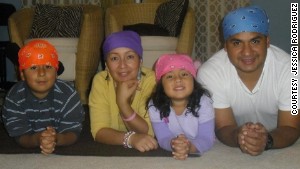
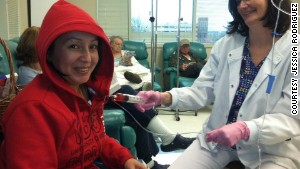
(CNN) -- Last summer, Jessica Rodriguez didn't want to go outside, or even open the door. She didn't want anyone to see she had lost her hair during breast cancer treatment.
Rodriguez, 39, said she found strength from the support of her husband and children, and through an organization called Nueva Vida, a support network for Latinas with cancer based in Washington. At support meetings, she met other women who had lost their hair in cancer treatment and realized she was not alone.
"They were going through the same," said Rodriguez, who moved to the United States from Peru 12 years ago and now lives in Germantown, Maryland. "I say: They're OK. It's only the hair. It's going to go grow back."
Some Latina breast cancer survivors such as Rodriguez have found comfort and assistance from organizations geared toward Hispanics. Nueva Vida and other groups are trying to address needs such as breaking language barriers, paying for treatment and finding support from others going through similar challenges.
Rodriguez said she didn't know how she could have paid for treatment without Nueva Vida. It introduced her to a Maryland state program that covered her surgery, chemotherapy and radiation.
"I may be not talking to you," she said. "I don't know. I don't think I could have made it without all the help."
What the statistics say
Cancer remains a major health problem among Hispanics, but statistics show they are at a surprising advantage compared with some other ethnic groups. Researchers are trying to figure out why.
In the United States, the death rate from all cancers among Hispanics is about 129 per 100,000 people per year, compared with 191 per 100,000 for whites and 239 per 100,000 for African-Americans/blacks, according to the National Cancer Institute. Breast cancer incidence and mortality specifically are also lower among Hispanics than whites or blacks, according to the American Cancer Society.

The figures are puzzling, given that Hispanics have a lower socioeconomic status on average than whites. Data from the Pew Research Center suggests the typical Hispanic household had $6,325 in wealth in 2009, while the typical white household had $113,149.
Even more curiously, a 2013 study in the International Journal for Equity in Health found that, among Hispanics in Texas, mortality rates for several cancers, including breast cancer, tend to be lower among those with more socioeconomic deprivation. A low mortality rate does not correspond with low socioeconomic status in whites and African-Americans, the study found. More research needs to be done to confirm these findings.
The phenomenon associating Hispanics with better health outcomes despite lower average income and education rates is called the "Hispanic paradox." A possible explanation for this trend is that smoking is much less common among Hispanics than non-Hispanic whites or African-Americans, according to the Centers for Disease Control and Prevention.
Another theory is that people who immigrate to the United States tend to be healthier than those who stayed in their home countries. It's also possible that some who get sick return to their home countries.
Despite slightly better statistical odds of not getting cancer than whites or blacks, Hispanics are not immune to these conditions, and breast cancer kills more Hispanic women than any other cancer.
More often in Hispanics than whites, breast cancer is detected at an advanced stage, according to the American Cancer Society.
A 2013 study in the journal JAMA Surgery focusing on young women with breast cancer, ages 15 to 39, found that the time between diagnosis and treatment of breast cancer differed significantly depending on the ethnicity of the participants. Researchers found that about 15% of Hispanic and African-American women waited more than six weeks for treatment, compared with 8% of non-Hispanic white women. Longer waiting periods are linked to shorter survival time, the study found.
Dr. Mariana Chavez MacGregor, breast oncologist at MD Anderson Cancer Center in Houston, said she believes that access to health care is partly responsible for the later detection of breast cancer in Hispanic women.


"If people have no health insurance, doing a test for something you don't even have, it's really at the bottom of the list," she said.
There are also, she said, "probably cultural reasons in which we may have more difficulty dealing with this and seeking medical attention."
What survivors say
Research is ongoing to narrow down the best ways to improve the quality of life among Hispanic breast cancer survivors and their caregivers. Nueva Vida is participating in a research project led by Kristi Graves at Georgetown University to figure out the best approaches.
The issues that tend to arise among Hispanic women who have breast cancer aren't unique to Hispanics, and it is impossible to generalize across individuals; there are also many cultures that fall under terms such as "Hispanic" and "Latina." Nonetheless, Graves and researchers have picked up on some themes that often arise.
"Breast cancer isn't always talked about in Latino families," Graves said. "In some of these families, when you mention cancer it's considered synonymous with death."
Some survivors Graves has spoken with didn't tell their families about the cancer diagnosis until they had to start chemotherapy, because they didn't want to worry them.
"For some of the women, when they did start talking about cancer, they were really pleasantly surprised at the amount of support and information that they received," Graves said.
For women whose first language is Spanish, translation may be an issue. They may have a hard time finding a physician with whom they feel comfortable, and who can adequately explain treatment options and procedures.
When family members step in to translate to doctors, some women hold back important details. For instance, one woman Graves met didn't tell her doctor about the problems with sexual functioning she was having during treatment, because her daughter was translating for her.
In her study, Graves will be testing an intervention in which survivors and caregivers share their concerns separately, in different groups, led by a facilitator, and then everyone comes together to talk about the topic.
When tried on a smaller scale, "(facilitators) delivered information separately to the survivors and caregivers; it seemed that each group could open up further and talk about their own specific needs," Graves said.
Getting help
Another community organization supporting Hispanic breast cancer patients is called Comadre a Comadre in Albuquerque, New Mexico. A comadre is a "non-biological close female kinship" in "the Hispanic/Latino extended family unit," the website explains.
This group was founded by six survivors and director Elba Saavedra, who is also an assistant professor for research at the University of New Mexico College of Education.
The organization works with women in a nonclinical setting, giving them resources and support during their breast cancer treatment. A grant from the Susan G. Komen for the Cure helped jump-start Comadre a Comadre in 2003. The organization offers support groups and classes in Spanish and English, one-on-one support and financial assistance.
Comadre a Comadre is trying to get out positive messages about screening and break down some of the cultural barriers. For instance, many women put the needs of the rest of their family before their own.
"We need to be there for children and grandchildren; it's important we get in there and get those mammograms," Saavedra said.
Dalila Romero, a co-founder of Comadre a Comadre, had breast cancer in her mid-40s. At the time, she had recently lost her mother to pancreatic cancer.
The support group she tried didn't resonate with her; she couldn't connect with the women there, who had different backgrounds and life stories from her own.
"Not knowing the resources in the community, I had to basically support myself because I didn't know what the outcome was going to be," Romero said.
Now she goes with women with recent diagnoses to their initial appointments for chemotherapy, radiation and surgery to help them navigate the system.
Some women are private about their struggle with cancer, so much so they don't want to sit around other women who have it. Romero knows of one woman who moved because she didn't want anyone in her town to know she had cancer.
When she learned about Nueva Vida, Rodriguez immediately liked the idea of finding support in other women who also had cancer, but she held back at first in telling her parents in Peru until doctors were sure of what it was.
"I didn't want my mom to get sad because she's over there and I'm here," she said. "I didn't want to worry them. I took time to tell them."
Clear of cancer, Rodriguez is currently a Zumba instructor through Nueva Vida, and loves teaching. The women in this organization have a lot of need, she said.
They are, she said, her "sister survivors."


Thursday, October 10, 2013

Latinos struggle to find help for mental health issues

(CNN) -- Thanks to Obamacare, nearly 6 million currently uninsured Latinos in the United States will have access to affordable health care come January 1, 2014, including mental health and substance-abuse services.
But some experts say that won't be enough to encourage mentally ill in the Hispanic community to seek help.
In 2011, 15.9% of Hispanic adults reported suffering from a mental illness the previous year, according to the National Survey on Drug Use and Health. But thousands in this population often go without professional mental health treatment.
Perhaps the most problematic issue for the Latino community is their fear of being highly stigmatized for accessing mental health services, experts say. Among Hispanics with a mental disorder, fewer than 1 in 11 contact a mental health specialist, while fewer than 1 in 5 contact a general health care provider, according to the American Psychiatric Association's Office of Minority and National Affairs. Even fewer Hispanic immigrants seek out these services.
If a mental health issue is even acknowledged, Latinos tend to rely on their extended, family, community, traditional healers and/or churches for help during a health crisis, according to the APA. As a result, Hispanics often mistake depression for nervousness, tiredness or a physical ailment, and see the issue as temporary.
There are also a lack of culturally relevant services that cater to this population.
"What makes it worse is having very few Latino leaders in the mental health workforce," said Henry Acosta, former executive director of the National Resource Center for Hispanic Mental Health. Less than 25% of mental health professionals are minorities, according to the American Psychological Association. "Most aren't bilingual and management hasn't enforced culturally relevant strategies."
Acosta knows from personal experience how trying the mental health care system can be for Latinos. After witnessing a friend being fatally shot following an altercation with a police officer in his New Jersey hometown, Acosta said he knew he would never be the same. But what he didn't expect was the severe depression that followed and -- what seemed worse -- being called "crazy" by his high school peers.
"When I was 16 years old, I tried to commit suicide," said Acosta, now 44. "Latinos always hear how they have to be self-reliant when they have problems or even turn to prayer. But if you have a chemical imbalance, prayer won't help you."
Even though the teasing in high school was bad, one of his worst memories is translating for his parents at the psychiatric ward because they only knew Spanish. "I wish the hospital had translators or even someone who understood us culturally," Acosta said.
Eventually, Acosta overcame his mental illness, got into college, majored in psychology and became a social worker. He's since made it his mission to change Latinos' apprehensive perspective on mental health issues and better the health care system in hopes others won't have to go through what he did.
"The situation for Hispanics in this country will only get worse unless the system changes," Acosta said.
According to the National Resource Center for Hispanic Mental Health, Hispanics are a high-risk group for depression, substance abuse and anxiety. About 1 in every 7 Latinos has attempted suicide. Hispanic adults and youth are also dealing with unique stressors like immigration and acculturation, according to the AMA -- which the organization said is even more of a reason to provide services that cater to this population.
"Latinos are overrepresented in service industry and those took a big hit with the recession," Acosta said. " 'Hard to make ends meet' is definitely a different kind of stressor."
Many older Latinos find the strain of acculturation overwhelming. Their traditional values and beliefs are often at odds with the new culture, or they may lack family support and face language barriers. Hispanic youth have also been found to be at risk for higher levels of emotional distress because of the pressures to rapidly adopt the values of their new culture while they suffer from inequality, poverty and discrimination.
According to the AMA, Hispanic youth suffer from many of the same emotional problems created by marginalization and discrimination, but without the secure identity and traditional values held by their parents.
"While working at a clinic in New York, I was seeing a Puerto Rican family who became increasingly concerned (about their) 21-year-old son," said Luis H. Zayas, dean of the school of social work at the University of Texas. "They said he was having trouble with nervios (nerves)."
The young man was eventually diagnosed with schizophrenia.
Tell us your story!
We love to hear from our audience. Follow @CNNHealth on Twitter and Facebook for the latest health news and let us know what we're missing.

"We were able to explain to the family the severity of the situation. It was a matter of helping them understand that their son's schizophrenia was a mental illness of the brain -- not be critical, avoid pejorative judgment and assure them that they didn't fail as parents."
After several months, Zayas said, the family refrained from using labels and changed their perspective on mental illness.
He said part of the problem is how the mental health and primary care systems are separated, and how they are presented to Latinos.
"I worked with undocumented immigrants who would ask for 'consejo' (advice) knowing they were asking for mental health services," Zayas said. "We could reduce the stigma significantly. ... It's how we present it to them. It helps to have integrated mental health services into the primary care setting. We should (be) bringing the services to them rather than bringing the people to the services."
In the last decade, the Latino population -- now at 53 million -- has grown by nearly 40%, and is expected to make up close to one-third of the nation's inhabitants by the year 2050. Tackling the mental health disparity now could prevent serious future health issues, experts say.
Obamacare will help fund new clinics and community centers in highly Hispanic-populated cities around the country, which would allow them to seek mental health care at little or no cost.
"Change won't happen overnight, but I think the key is educating the current population and, even more, motivating the Latino youth interested in the health sector," Acosta said.
"After having gone through my own mental health issues, I can tell you that just knowing you aren't alone is so important," Acosta said. "Most times we have our own answers, but if I had someone who understood where I came from it would have made an even bigger difference."

Wednesday, October 9, 2013

Salmonella outbreak linked to tainted chicken

Salmonella outbreak linked to tainted chicken


A Salmonella outbreak linked to a California poultry producer has sickened approximately 278 people in 18 states, health officials say. As of Tuesday morning, no recall had been issued.
Raw chicken products from Foster Farms plants have been identified as the likely source of this outbreak of Salmonella Heidelberg.

The Food Safety and Inspection Service (FSIS), an agency of the U.S. Department of Agriculture, has so far been unable to identify the specific product or production period, but raw products from the potentially affected facilities bear one of the following numbers on the packaging: P6137, P6137A, P7632. These product numbers were mainly distributed to retail outlets in California, Oregon and Washington state.
The Centers for Disease Control and Prevention is partnering with state health departments to monitor the outbreak while FSIS continues its investigation, but due to the government shutdown, current information may not be available on the agencies' websites.
"While the company, FSIS and CDC continue to investigate the issue, Foster Farms has instituted a number of additional food safety practices, processes and technology throughout company facilities that have already proven effective in controlling Salmonella in its Pacific Northwest operations earlier this year," Foster Farms said in a statement on its website.
The CDC first alerted FSIS to a growing number of Salmonella cases on July 1, USDA spokesman Aaron Lavallee told CNN. At the time, 18 people had been sickened in four states, and Foster Farms was a possible link between the patients. USDA investigators began "site sampling," or testing Foster Farms facilities on September 9, and concluded their analysis of the majority of the samples collected on October 7.
"The partial government shutdown did not affect the investigation or communication with the public," Lavallee said.
The Salmonella outbreak comes one week after CDC Director Tom Frieden tweeted: "CDC had to furlough 8,754 people. They protected you yesterday, can't tomorrow. Microbes/other treats didn't shut down. We are less safe."
That raises the question: With government agencies like the CDC on furlough due to the partial government shutdown, is our food supply safe?
The shutdown notice issued by the USDA indicates the the FSIS will continue to inspect birds and animals intended for use as food both before and after slaughter, supervise the further processing of meat and poultry products, ensure that meat, poultry and egg products are safe and also prevent the sale of adulterated meat or poultry products. Despite furloughing 1,218 employees, the USDA says no meat and poultry inspectors have been put on leave.
But future outbreak investigations could be affected by the government shutdown if it continues much longer, some experts say.
"The CDC is the central coordination point and often the leader of the investigation, and the state health departments all collaborate under the umbrella of CDC guidance," says Dr. William Schaffner, chairman of the department of preventive medicine at Vanderbilt University. "The CDC invariably is the conductor of the investigative orchestra."
CDC spokeswoman Barbara Reynolds said, “We had about 10 people in the division. Now we have almost the full complement of 30 who were working on PulseNet and epidemiological surveillance.”
“[The] Foodborne [Division] has brought back a number of people to work on this and other clusters of outbreaks,” Reynolds said.
Along with USDA, the CDC believes it has identified what caused the illness, “But the more information we have, the stronger the evidence that we’ve found the source of the outbreak. There’s still some information to be collected and analyzed. All that information helps us determine the timing: how this began, what it began with,” said Reynolds.
State labs are able to do specimen collection and typing but at CDC, Reynolds said the data collection, analysis and input process is more involved. Some of this can be done through email or even by hand, but to get a full sense of it, it needs to be put into the CDC system.
Reynolds added that because of the shutdown, “It’s fair to say there was a delay in the exchange of information. It slowed us down.”
Consumers with food safety questions can "Ask Karen," the FSIS virtual representative available 24 hours a day at AskKaren.gov. The toll-free USDA Meat and Poultry Hotline (1-888-674-6854) is available in English and Spanish and can be reached from 10 a.m. to 4 p.m. ET on weekdays. Recorded food safety messages are available 24 hours a day. Consumers with concerns about Foster Farms products should call the company at 1-800-338-8051.
Food poisoning: What you need to know
The Food and Drug Administration recommends a minimum internal temperature of 165 degrees Fahrenheit in order to ensure that harmful bacteria is killed off. The reading should be taken from the thickest part of the flesh, not touching a bone.
Washing poultry before cooking it is not recommended. Bacteria in raw meat and poultry juices can be spread to other foods, utensils, and surfaces. Cooking (baking, broiling, boiling, and grilling) to the right temperature kills the bacteria, so washing food is not necessary.
Fast facts on salmonella
The CDC reports that people in a normal state of health who ingest Salmonella-tainted food may experience diarrhea, fever and abdominal cramps, which typically begin within 12 to 72 hours. This may be accompanied by vomiting, chills, headache and muscle pains. These symptoms may last about four to seven days, and then go away without specific treatment, but left unchecked, Salmonella infection may spread to the bloodstream and beyond, and may cause death if the person is not treated promptly with antibiotics.
Children, the elderly, and people with compromised immune symptoms should practice extreme caution, as salmonellosis may lead to severe illness or even death.
About 48 million people contract some form of food poisoning each year, according to the CDC.
Salmonella was the top cause of foodborne illness, according to the CDC's 2012 report card on food poisoning. However, the overall incidence of Salmonella was unchanged from the 2006-08 data, the agency said. The report card is based on reports from 10 U.S. regions, representing about 15% of the country.
Resource:http://eatocracy.cnn.com/2013/10/07/salmonella-outbreak-may-be-linked-to-tainted-chicken/

Reading Health Information